3 Things Sydney Tree Pruning Services Check Before They Touch Your Tree

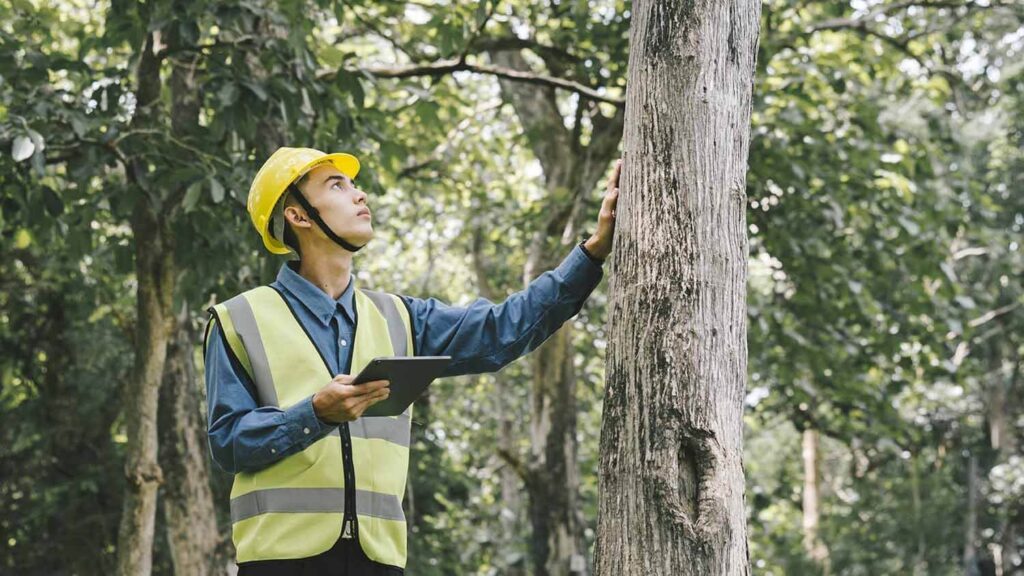
But what most people do not see is what happens before the first cut. The best crews do not walk up, start a chainsaw, and just go for it. There is a process. Sometimes it looks slow. Sometimes it looks like nothing is happening. But that is where the real skill is.
And if you are hiring Sydney tree pruning services, it helps to know what they are checking, and why. It also helps you spot the difference between a careful, qualified crew and someone who is basically guessing.
Here are the three things solid Sydney tree pruning services check before they touch your tree.
1. They figure out what the tree is, and what it is trying to do
This sounds obvious, but it is the most skipped step by rushed operators. Species matters. Age matters. Growth habit matters. Even time of year matters. If you prune the wrong tree the wrong way at the wrong time, you can trigger weak regrowth, disease issues, or just a weird looking canopy that takes years to correct.
So the first thing good Sydney tree pruning services do is identify the tree and read it a bit.
Species and growth pattern
Some trees tolerate pruning really well. Others do not. Some want a light touch and a few thoughtful cuts. Some can take a more structured reduction, but only when done correctly.
A crew that knows local species will often be thinking things like:
- Is this a tree that responds with epicormic shoots after heavy pruning?
- Does it have brittle limbs that snap unpredictably?
- Is it prone to fungal problems after large cuts?
- Does it naturally grow with one leader or multiple leaders?
This is not trivia. It changes the whole approach.
What is the tree’s goal right now?
Trees are always doing something. They are pushing new growth, reacting to past damage, competing for light, leaning toward space, sealing old wounds, and so on. The pruning plan should work with that, not against it.
A decent arborist or pruning crew might stand there and notice:
- The canopy is weighted to one side because it is chasing sun
- The tree has a history of storm damage and has formed weak unions
- The new shoots are crowded, which can turn into rubbing branches later
- There is deadwood that is not obvious from the ground until you really look
When you see Sydney tree pruning services walking around the tree, looking up from different angles, sometimes stepping back into the driveway to get the full silhouette, this is what they are doing. They are reading the structure.
Health checks, even the quick ones
Before pruning, they will usually look for signs of stress or decline, like:
- Dead tips, thinning foliage, or dieback
- Cracks in major limbs
- Mushrooms or fungal bodies around the trunk or root flare
- Borer holes, oozing sap, or unusual bark changes
- Previous pruning wounds that did not seal well
Because here is the uncomfortable truth. Sometimes pruning is not the main solution. Sometimes it is a symptom of a bigger issue. And if a tree is already struggling, the pruning approach should be conservative and strategic, not aggressive.
That is why better Sydney tree pruning services will talk about tree health early, not after they have already removed a third of the canopy.
2. They check risk and access, not just the branches you want gone
Most homeowners call because something is “in the way”.
Branches over the roof. Too close to power lines. Blocking the view. Dropping leaves in the gutter. Smacking the fence in a windy night. Fair enough. Those are real problems.
But from a professional point of view, the question becomes: what is the safest way to reduce risk today without creating a bigger risk later?
Good Sydney tree pruning services check the tree, the site, and the targets around it.
Targets and consequences
The crew will look at what the tree could hit if something goes wrong. Not just during pruning, but also later, after pruning, during storms.
Common targets are:
- Roofs, gutters, skylights
- Cars in driveways
- Fences and retaining walls
- Neighbouring properties
- Sheds, pergolas, solar panels
- Footpaths and public areas
A proper pruning plan is usually tied to risk. For example, removing end weight on long limbs over a roof can reduce the chance of failure. But if you reduce incorrectly, you can also create weak, fast regrowth that becomes a problem again in two years.
So yes, they are thinking ahead.
Powerlines and “no go” zones
If branches are near powerlines, the approach changes immediately. In many cases, only line clearance professionals or the appropriate authorised crews can work within certain distances. Even if you want it done, a responsible crew should tell you what they can and cannot do.
If you ever see Sydney tree pruning services glance at overhead lines and then start talking about clearances and who is responsible, that is a good sign. It means they are not improvising around electricity. Nobody should.
Access, rigging, and drop zones
Pruning is not just cutting. It is controlled removal. A crew needs to know:
- Where they can safely stand and climb
- Whether they need ropes, rigging, or lowering devices
- Whether sections need to be lowered to avoid damage
- Whether there is a clear drop zone
- Whether they need traffic management near a road or footpath
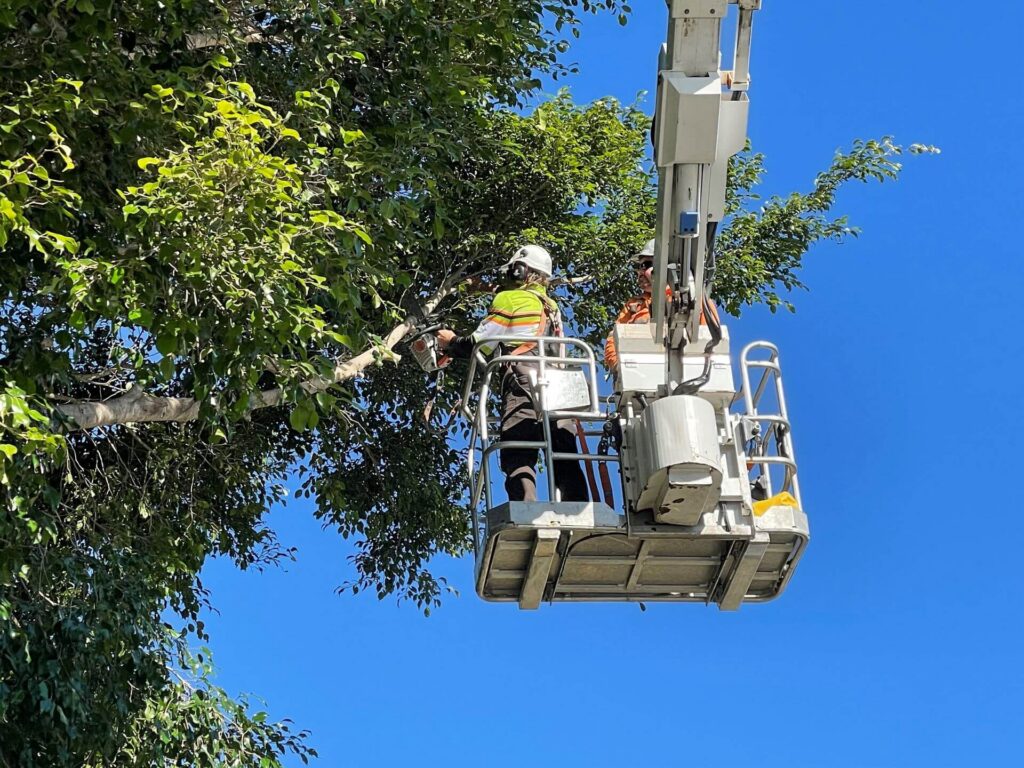
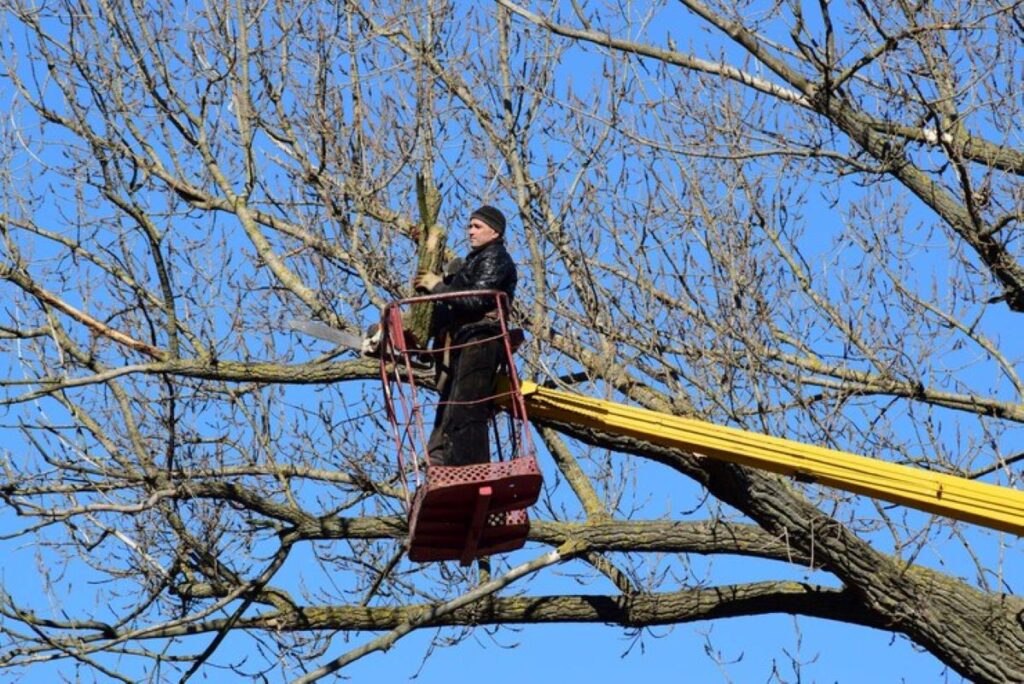
A careful team might spend time planning where each piece will go. You might hear them say things like “we will rig that limb down” or “we will take small sections over the roof”. That is the work. That is the professionalism.
And honestly, this is where price differences often come from. Cheap pruning is often cheap because it is fast and messy. Controlled pruning costs more because it is slower, safer, and requires skill and gear.
This is why the better Sydney tree pruning services will ask questions that sound unrelated at first, like:
- Can we park the truck close?
- Is there side access to the backyard?
- Are there pets inside?
- Is the ground soft or sloped?
- Where do you want the mulch or branches to go?
They are building a plan that reduces damage risk to your home and to the tree.
3. They decide the pruning objective, and the exact cuts that match it
This is the part most clients assume is simple. “Just trim it back.”
But trimming back can mean twenty different things. And some of them are terrible for the tree.
Strong Sydney tree pruning services clarify the objective first, then choose pruning types that actually achieve it without wrecking the structure.
The objective comes first
Common objectives include:
- Clearance from roof, gutters, walls, or windows
- Clearance for pedestrians, vehicles, or driveway access
- Weight reduction on long limbs to reduce failure risk
- Deadwood removal for safety and tree health
- Canopy thinning to reduce wind resistance (when appropriate)
- Structural pruning to improve branch spacing and unions
- View improvement while maintaining a natural shape
Each objective points to a different set of cuts. If someone cannot explain the objective beyond “make it smaller”, that is a red flag. Check out more about stump grinding in Sydney and the differences between same-day services and scheduled jobs.
They avoid topping, unless someone is explicitly asking for a problem
Topping is when you cut the upper canopy back to stubs, basically removing the natural crown. It is still requested sometimes because it looks dramatic and immediate.
But it tends to cause:
- Dense, weak regrowth that snaps later
- Sunburn on exposed branches and trunk
- Large wounds that decay can enter through
- A cycle of repeated heavy pruning every few years
Good Sydney tree pruning services will usually steer you away from topping and toward better alternatives like reduction pruning with proper lateral cuts, or selective limb removal.
And they should explain it in plain language. Not in a lecture. Just enough so you know what you are paying for.
Cut selection and branch collar awareness
You do not need to be an arborist to appreciate this. The tree has natural areas that help it seal a wound. If you cut in the wrong spot, you create a wound that struggles to close, and decay can move in.
A skilled pruner will:
- Cut back to suitable laterals when reducing length
- Avoid flush cuts that damage the collar
- Avoid leaving long stubs that die back
- Balance cuts across the canopy so the tree is not left lopsided
This is the quiet craft part. It is not flashy. But it matters more than anything.
How much they remove, and why
You will often hear responsible crews talk about not removing too much in one go. Because over pruning can stress the tree, especially in hot weather or during drought conditions.
They may consider:
- Overall canopy percentage being removed
- Whether the tree can handle reduction this season
- Whether staged pruning across multiple visits is better
- Whether removing one major limb changes wind loading on the rest of the crown
This is another reason to hire proper Sydney tree pruning services instead of a handyman with a saw. The tree is a living structure. It reacts. And the crew should be thinking about that reaction.
A quick “what you can ask on the day” checklist
If you want to feel confident before the work starts, here are simple questions that usually get you clear answers.
Ask your Sydney tree pruning services team:
- What is the main objective of the prune today?
- Which limbs are the highest risk, and why?
- Are you doing reduction cuts, thinning, or removal?
- How will you avoid damage to the roof, fence, or garden?
- Will you be rigging anything down, or dropping it?
- Do you see any signs of disease or structural weakness?
- How often do you think this tree should be pruned after today?
You do not need perfect technical terms. You just want to hear that they have a plan and can explain it without getting defensive.
The little difference you feel afterward
When pruning is done well, the tree still looks like itself. Just cleaner. More balanced. Safer. It should not look butchered. It should not look like it was attacked.
And the weird thing is, the best outcome sometimes looks like “they did not even do that much”. Because the right cuts in the right places do more than a hundred random cuts.
That is what good Sydney tree pruning services are doing before they touch your tree. They are checking the species and health, assessing risk and access, then setting a clear objective and matching it with correct pruning cuts.
If you see that kind of care before the first branch comes off, you are probably in good hands.
See Also : Horticulture – Pruning and tree surgery