Arborist Sydney: How to Hire the Right One (and Spot the Fakes)

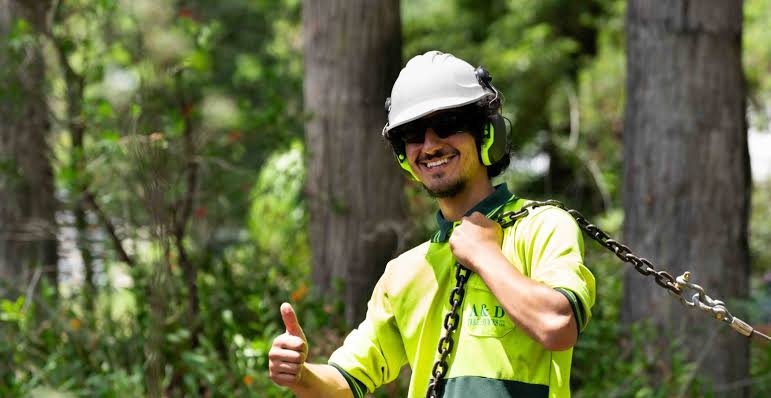
The word arborist is not protected in Australia. Anyone with a chainsaw and a ute can print it on a business card. That gap between the title and the training is why homeowners end up with butchered trees, rejected council applications and, occasionally, a limb through the roof.
This guide explains what a qualified arborist Sydney property owners should be hiring actually holds, when you need a consulting arborist versus a climbing crew, what reports cost, and the specific checks that separate professionals from cowboys.
What an Arborist Actually Does
An arborist is a trained specialist in the cultivation, management and study of individual trees. The role splits into two broad streams.
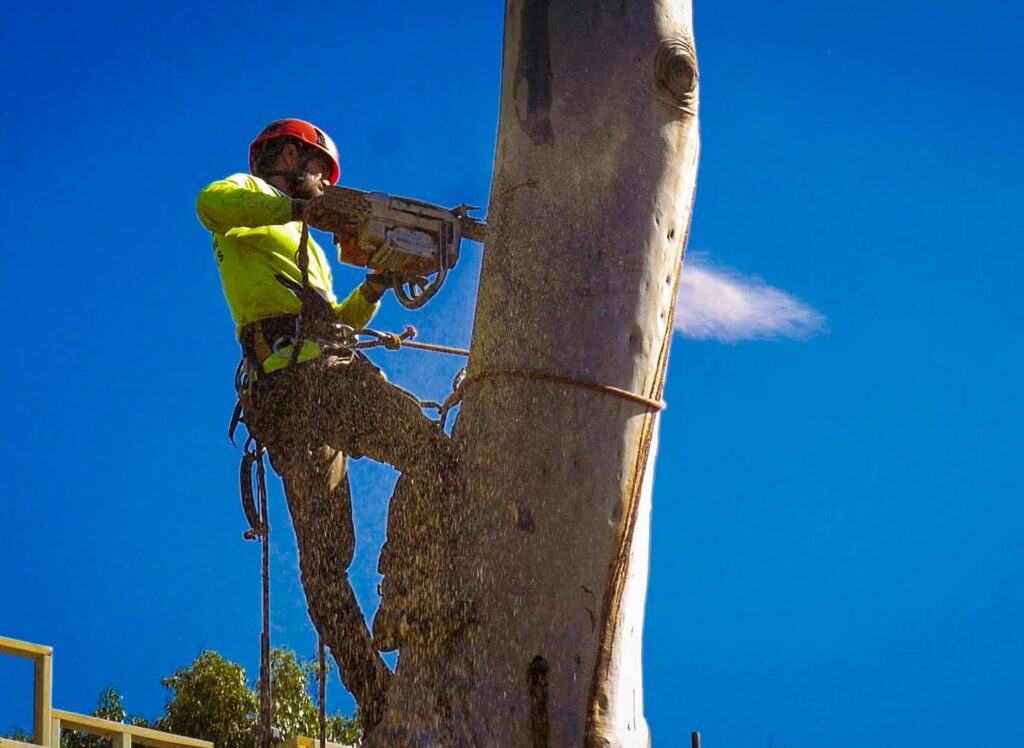
Practical or climbing arborists perform the physical work: pruning, sectional dismantling, removal, cabling and bracing, planting and transplanting.
Consulting arborists assess and document: tree health diagnostics, risk assessment, valuation, arboricultural impact assessments for development applications, and expert evidence for the Land and Environment Court.
Many jobs need both. A consulting arborist Sydney councils recognise will write the report; a climbing crew will execute the works it recommends.
The AQF Levels: The Number That Matters
Australian arboriculture qualifications sit within the Australian Qualifications Framework. Three levels matter in practice.
AQF Level 3 – Certificate III in Arboriculture
The minimum standard for anyone climbing and cutting. Covers tree climbing, aerial rescue, chainsaw operation, rigging, pruning technique and basic tree biology. Any crew member working aloft on your property should hold this.
AQF Level 5 – Diploma of Arboriculture
The standard required for tree risk assessments, arboricultural impact assessments and reports submitted to council. Most Sydney councils explicitly require an AQF Level 5 consulting arborist for anything beyond a basic removal application. The City of Parramatta, for example, requires a tree risk assessment by a qualified AQF Level 5 consulting arborist where a tree is claimed to pose imminent risk. Check SafeWork NSW arboriculture guidance for core safety risks before hiring.
AQF Level 8 – Graduate Diploma
Advanced specialisation. Relevant for complex litigation, large development sites and heritage tree management.
When you ring an arborist Sydney wide, ask directly: what AQF level is the person attending, and what level will sign the report? A vague answer is your answer.
When You Need a Consulting Arborist Report
You will need a written report for most of these:
- Applying to council to remove or heavily prune a protected tree
- A development application where trees sit within or adjacent to the footprint
- Tree Protection Zone calculations and construction supervision
- Neighbour disputes heading to the NSW Land and Environment Court under the Trees (Disputes Between Neighbours) Act 2006
- Insurance claims after storm damage or structural failure
- Pre-purchase due diligence on a heavily treed property
What a report contains
Species identification, dimensions, health and structural condition rating, useful life expectancy, a documented risk assessment methodology, photographs, a site plan with tree locations and protection zones, and clear recommendations. Councils reject reports that are essentially a quote with a letterhead.
What an Arborist Costs in Sydney
- Site visit and verbal assessment: often free with a works quote, or $150 to $350 standalone
- Basic tree health/risk report (1-2 trees): $400 to $900
- Arboricultural Impact Assessment for a DA: $800 to $2,500 depending on tree numbers
- Tree Protection Zone supervision and certification: $250 to $600 per site visit
- Expert witness work: $200 to $400 per hour
- Climbing crew day rate (three people plus chipper): $1,400 to $2,400
The report cost is trivial compared with the cost of a refused application or an enforcement notice. Treat it as insurance.
Insurance and Compliance Checks
Before any arborist Sydney based crew starts work, ask for and actually read:
- Public liability certificate of currency. Minimum $20 million. Check the expiry date and that the named entity matches the business quoting you.
- Workers compensation. If an uninsured subcontractor is hurt on your property, you can be exposed.
- Qualifications. Copies of Certificate III or Diploma, plus any accreditation for work near overhead power lines.
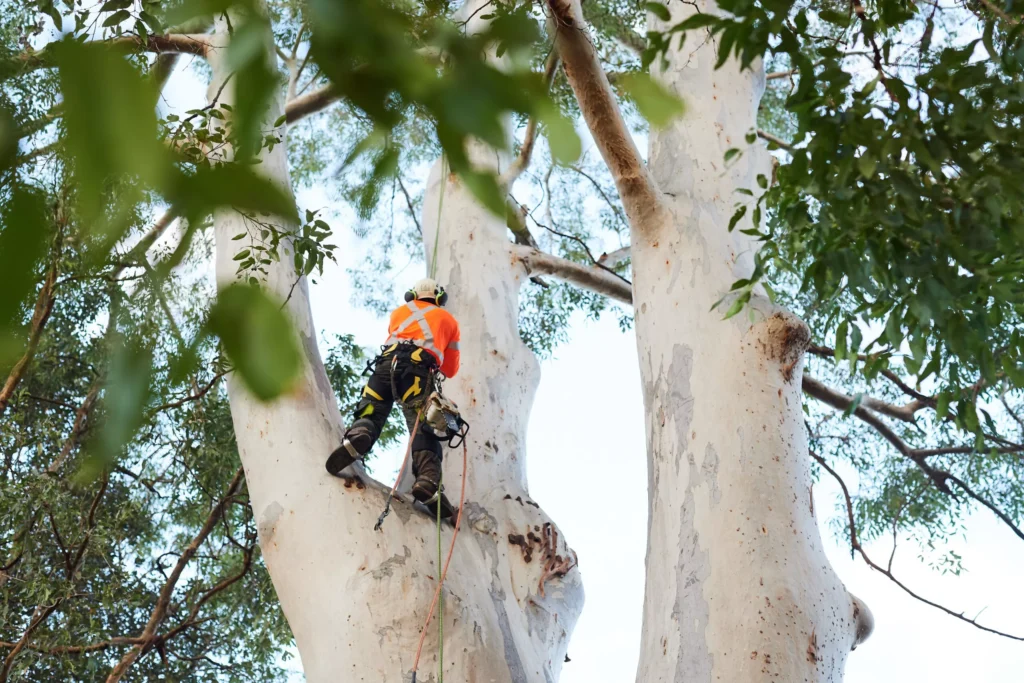
- Safe Work Method Statement. For high-risk work such as working at height above two metres, a written SWMS is a legal requirement.
SafeWork NSW has flagged an increase in serious incidents involving tree work, driven by falls from height and workers struck by falling objects, and has prosecuted operators for exactly these failures. This is not paperwork theatre.
Red Flags
- Door-knocking after a storm with a cash-only price and a today-only deadline
- No written quote, no ABN, no certificate of currency
- Recommending topping or lopping as a default solution
- Climbing on a single attachment point, or working from an extension ladder with a chainsaw
- No exclusion zone, no helmet, no chaps
- Unwilling to name where the green waste is being tipped
- Quoting to remove a protected tree without mentioning council consent
That last one is the biggest tell. A legitimate arborist Sydney operator raises the permit question before you do.
Questions to Ask Before You Book
- What is your assessment of the tree, and is removal genuinely necessary?
- What are the alternatives to removal, and what do they cost?
- Does this work require council consent, and will you prepare the application?
- Who is attending, and what are their qualifications?
- Is stump grinding included, and to what depth?
- Is all green waste removed, and where does it go?
- What happens if there is property damage?
- Is the quote fixed or subject to variation?
Tree Disputes With Neighbours
NSW has a specific pathway for this. Under the Trees (Disputes Between Neighbours) Act 2006, the Land and Environment Court can order pruning or removal of a tree that has caused, is causing or is likely in the near future to cause damage to property or injury to a person. Hedge obstruction of sunlight or views is dealt with separately under Part 2A.
The court expects evidence, which in practice means an independent arborist Sydney report rather than a strongly worded letter. Attempt mediation first. Applications are not cheap and the court will ask what you did to resolve it directly.