Tree Trimming Sydney: A Practical Maintenance Guide for Homeowners

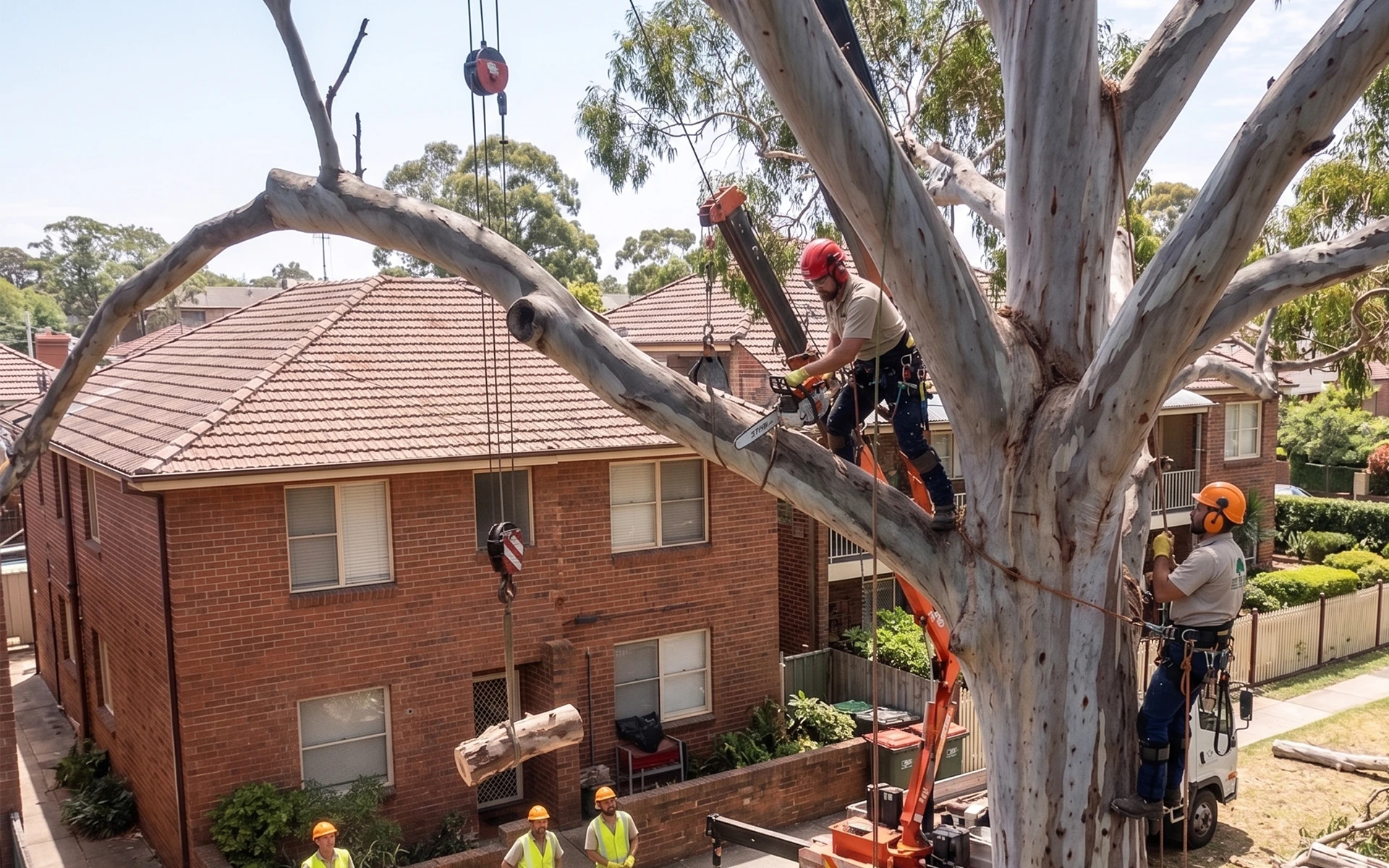
Most Sydney gardens do not need dramatic intervention. They need regular, competent maintenance: gutters kept clear, limbs kept off the roof, deadwood taken out before the storm season, and hedges kept tight. That is what tree trimming Sydney services are for, and it is the cheapest form of tree care there is.
This guide sets out a realistic maintenance schedule, explains where the legal and safety limits sit, and gives honest pricing so you can tell a fair quote from a fishing expedition.
Trimming vs Pruning vs Lopping
The three words get used interchangeably and they should not be.
Trimming generally refers to maintaining shape and clearance: hedges, shrubs, screening plants and light canopy work. Cosmetic and functional.
Pruning is targeted, biology-led removal of specific branches for the tree’s structure and health.
Lopping is indiscriminate cutting back to stubs. Avoid it.
In everyday Australian usage, tree trimming Sydney companies use the term to cover both trimming and light pruning. What matters is that you specify the outcome you want, not the verb.
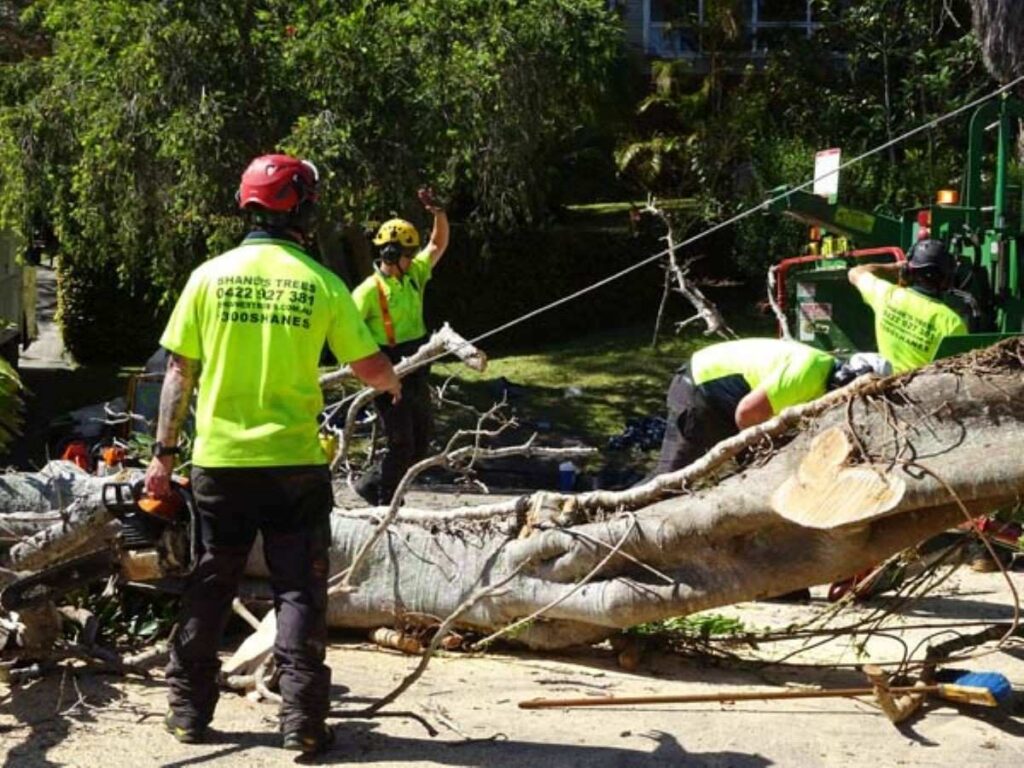
A Realistic Maintenance Schedule
Every 6 to 12 months
- Formal hedges (murraya, lilly pilly, photinia, buxus)
- Fast-growing screening plants
- Small ornamentals near paths and driveways
- Palm frond and seed head removal
Every 1 to 2 years
- Clearance trimming around rooflines, gutters and solar panels
- Fruit tree maintenance
- Young tree formative work
Every 3 to 5 years
- Mature canopy deadwooding
- Crown thinning on large gums
- Structural assessment by a qualified arborist
Annually before storm season
Sydney’s severe weather peaks from late spring through summer. Book clearance and deadwooding work in autumn or early winter. Every operator in the city is booked solid the week after a major storm, and emergency rates apply.
The Power Line Problem
This is the part of tree trimming Sydney work that homeowners consistently underestimate.
Vegetation near overhead power lines is subject to strict approach distances. SafeWork NSW’s tree-work guidance explains why untrained people, and even qualified arborists without specific accreditation, must not work within the defined exclusion zone around live conductors. Electricity can arc across a gap; you do not need to touch the wire to be killed.
In practice:
- Service line to your house: your responsibility, but the work must be done by an accredited operator, and the network provider may need to de-energise or fit tiger tails first.
- Street mains: the network operator manages clearance and does it on a cycle. Report contact rather than doing it yourself.
- Bundled aerial cables: still dangerous. Same rules apply.
SafeWork NSW publishes a specific code of practice for work near overhead power lines, and contact with live conductors remains one of the leading causes of death in the tree industry.
Hedges: Getting the Technique Right
Hedge trimming looks trivial and is the most commonly ruined job in suburban gardens.
Batter the sides. The hedge should be slightly wider at the base than the top, so light reaches the lower foliage. Vertical or top-heavy hedges go bare at the bottom and never recover.
Trim little and often. Frequent light cuts keep growth dense. Waiting two years then cutting hard exposes bare wood.
Know your species. Lilly pilly, murraya and photinia reshoot readily from old wood. Conifers such as cypress and thuja largely do not; cut into brown wood and it stays brown permanently.
Check for nesting birds. Disturbing active nests of protected native birds is an offence under the Biodiversity Conservation Act 2016.
A competent tree trimming Sydney crew will raise all four of these before starting.
Palms: A Sydney Specialty
Sydney has an enormous population of cocos (queen) palms, many of which are declared weeds in coastal council areas because of their invasive seed spread.
Palm maintenance means removing dead and hanging fronds and, importantly, the seed heads. Do not overclean: cutting green fronds above the horizontal weakens the crown and creates a pencil-point profile that is more likely to snap. Removing seed pods annually is genuinely useful, both for weed control and because a falling cocos seed head is heavy enough to hurt someone.
What Tree Trimming Costs in Sydney
- Hedge trimming under 2m: $15 to $35 per linear metre
- Hedge trimming over 2m: $25 to $60 per linear metre
- Small tree shape and clearance: $250 to $500
- Medium tree canopy trim: $500 to $1,200
- Large tree deadwood and clearance: $1,200 to $3,500
- Palm frond and seed head removal: $150 to $400 per palm
- Two-person crew hourly with chipper: $150 to $250
Most quotes include green waste removal. Confirm it in writing, and ask whether the crew can leave the chip as mulch.
What drives price up
Access is everything. Rear gardens with no side access, steep blocks, work over pools or glasshouses, proximity to power lines, and hard hardwood species all add hours. A quote given over the phone without a site visit is a guess.
When to DIY and When to Stop
Reasonable DIY: hand shears and battery hedge trimmers on hedges under two metres; pole pruning small branches you can reach with both feet on the ground; picking up fallen debris.
Stop and call a professional when: the work requires a ladder plus a chainsaw; the branch is above a roof, fence, pool or car; any part of the tree is within the exclusion zone of a power line; the limb is thicker than your arm; or the tree is protected under council controls and the trim exceeds 10 percent of canopy.
Sydney council rules follow the same State Environmental Planning Policy that governs removal. Trimming more than roughly 10 percent of a protected tree’s canopy generally requires consent, and species exempt in one LGA may be protected in the next. Any professional tree trimming Sydney business should know your council’s thresholds.
Signs a Trim Is Overdue
- Branches physically touching the roof or rubbing in wind
- Gutters filling with leaf litter within weeks of cleaning
- Deadwood visible in the canopy
- Hedges bare at the base and thick on top
- Palm fronds hanging vertically or seed heads dropping
- Shade so dense that lawn beneath the tree has died out
- Growth encroaching over a neighbour’s boundary