5 Hidden Dangers of Leaving Tree Stumps in Your Yard
Many homeowners in Australia view a leftover tree stump as a harmless relic of a previous landscaping project. After a tree is felled, the stump is often left behind to “save costs” or because it seems like a DIY project for another day. However, beneath the surface, a decaying stump is a ticking time bomb for your property’s ecosystem and safety.
From attracting devastating subterranean termites to harboring fungal pathogens that kill healthy flora, the risks are significant. This guide explores the five primary dangers of leaving tree stumps in your yard and why professional removal is a non-negotiable step for maintaining a safe, healthy Australian home.
See more: How Much Does Tree Removal Blue Mountains Cost on Average?
Understanding the Lifecycle of a Tree Stump
When a tree is cut down, the visible portion is gone, but the biological entity remains. A stump is essentially a large mass of organic carbon. In the Australian climate—ranging from the humid subtropics of Queensland to the temperate zones of New South Wales—this wood undergoes a slow process of decomposition.
This decomposition isn’t just a natural “fading away.” It is an active biological process that invites scavengers, pathogens, and structural instability into your immediate living environment.
1. The Termite Magnet: Prime Real Estate for Pests
In Australia, and specifically in regions like Sydney, subterranean termites are a constant threat to property integrity. A decaying tree stump is the ultimate “starter home” for a termite colony.
Why Stumps Attract Termites
Termites feed on cellulose, and a damp, rotting stump provides an abundant, easily accessible food source. Because the stump is connected to a network of old roots extending deep into the soil, it acts as a subterranean highway.
- Proximity to the Home: If a stump is within 10 to 20 meters of your house, it serves as a staging ground. Once the colony outgrows the stump, the workers will forage outward, eventually finding the timber framing of your home.
- Other Pests: Beyond termites, stumps attract carpenter ants, wood-boring beetles, and even snakes or rodents seeking shelter in the hollowed-out wood.
2. The Spread of Root Rot and Fungal Pathogens
One of the most overlooked “hidden dangers” is the risk to your remaining healthy trees. A stump doesn’t always die immediately; sometimes, it lingers in a state of decay that breeds virulent fungi.
Honey Fungus and Armillaria
In many Australian gardens, the spread of Armillaria (Honey Fungus) is a major concern. This pathogen spreads through the soil via “rhizomorphs”—root-like structures that can travel long distances.
- Infection of Healthy Roots: If the stump was left behind after a tree died of disease, that disease remains in the soil.
- Contamination: When the roots of your healthy gum trees or ornamentals come into contact with the infected stump roots, the rot transfers, leading to a slow decline and eventual death of your prized landscape.
3. Liability and Trip Hazards
A tree stump is a significant safety liability, particularly for families with children or elderly residents.
Hidden Dangers Underfoot
Over time, grass, weeds, and leaf litter can grow over a stump, camouflaging it. This creates a “hidden” obstacle that can cause:
- Pedestrian Injuries: Twisted ankles, broken bones, or head injuries from falls.
- Legal Liability: If a guest or a neighbor trips on a stump on your property, you may be held liable for their medical expenses under public liability norms.
- Equipment Damage: Hitting a stump with a lawnmower blade can instantly destroy the mower’s crankshaft, leading to hundreds of dollars in repair costs.
4. Unwanted Re-growth and Invasive Suckering
Many Australian species, such as Eucalyptus and certain privets, are incredibly resilient. Leaving the stump often results in “suckering,” where small shoots begin to grow from the base or the surrounding roots.
The Cost of Neglect
- Nutrient Theft: These suckers act like parasites, stealing nutrients and water from the surrounding lawn and nearby plants.
- Ugly Aesthetics: Instead of a clean yard, you end up with a cluster of unsightly, shrub-like growth that is difficult to manage.
- Persistent Maintenance: You can cut these shoots back, but they will continue to return until the stump is fully ground down or chemically treated.
5. Obstruction of Landscaping and Property Value
From a commercial and aesthetic standpoint, a stump is a dead weight on your property value.
Impact on Useable Space
If you plan to install a new fence, a patio, or an outdoor kitchen, an old stump and its root system can block your progress.
- Foundation Interference: Old roots can interfere with plumbing, sewage lines, and the laying of new foundations.
- Curb Appeal: A rotting, grey stump in the middle of a manicured lawn signals neglect to potential buyers, often resulting in lower offers or longer times on the market.
Professional Stump Removal vs. DIY
While some homeowners attempt to dig out stumps manually, the sheer scale of the root system usually makes this impossible without heavy machinery.
| Method | Pros | Cons |
| Manual Digging | Zero cost (except labor) | Physically exhausting; leaves deep roots behind. |
| Chemical Rotting | Minimal physical effort | Takes months or years; introduces toxins to soil. |
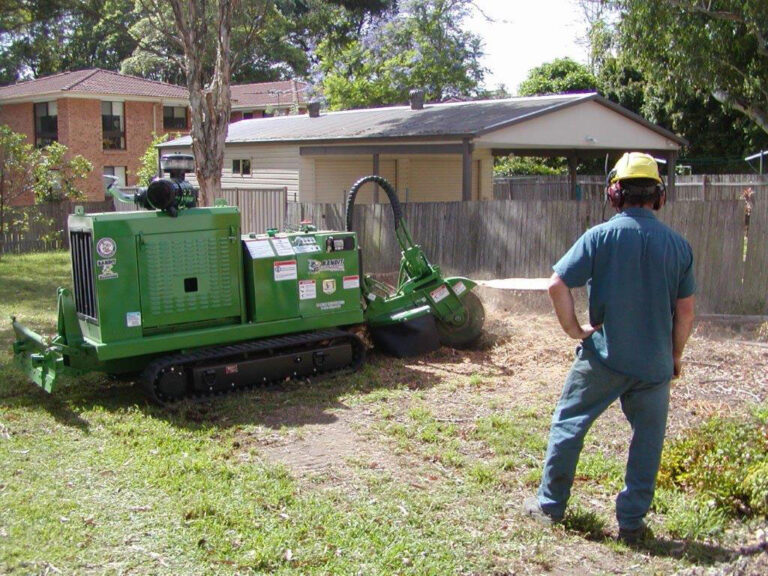
| Stump Grinding | Fast; removes the core; immediate results | Requires specialized machinery. |
| Full Excavation | Total removal of all roots | High cost; disrupts large areas of the yard. |
The Best Practice: Stump Grinding
Professional stump grinding is the most efficient balance of cost and effectiveness. A high-speed disk with carbide teeth chews the wood into mulch, usually to a depth of 300mm below the surface, effectively severing the “biological engine” of the stump.
Common Mistakes to Avoid
- Covering it with soil: This actually accelerates rot and creates a sinkhole as the wood collapses.
- Burning the stump: In many parts of Australia, open fires are restricted. Furthermore, stumps can smolder underground for days, posing a fire risk to nearby structures.
- Ignoring small stumps: Even a small stump from a sapling can harbor termites or cause a trip.
Internal & External References
- Internal Link Suggestion: The Ultimate Guide to Tree Removal Regulations in Sydney.
- Internal Link Suggestion: How to Identify Termite Activity in Your Garden.
- External Reference: Consult the Tree Contractors Association of Australia for safety standards.
- External Reference: Refer to CSIRO research on subterranean termite behavior in urban environments.
Frequently Asked Questions (FAQ)
How long does it take for a tree stump to rot naturally?
In Australia, depending on the wood density and moisture levels, a stump can take anywhere from 10 to 20 years to fully decompose. During this entire period, it remains a hazard for termites and fungi.
Can I leave a stump if it’s far from my house?
While the risk to your home’s structure is lower, the risk of “root rot” spreading to other trees and the potential for it to become a breeding ground for snakes or pests remains high.
Will termites definitely find my tree stump?
In many parts of Australia, it is a matter of “when,” not “if.” Termites are highly active in the soil; a large source of decaying wood is an inevitable target for a foraging colony.
Does stump grinding kill the roots?
Grinding removes the main bulk of the stump and the root flare. While some deep roots remain, they are severed from their energy source and will eventually die off without causing further growth.
Is it cheaper to remove a stump at the same time as the tree?
Yes. Most arborists offer a significant discount if they perform stump grinding while they are already on-site with their equipment and crew.
Conclusion: The Path to a Safer Yard
Leaving a tree stump in your yard is a gamble with your property’s safety and your garden’s health. The 5 hidden dangers of leaving tree stumps in your yard—ranging from termite infestations to significant liability risks—far outweigh the temporary cost savings of ignoring them.
By investing in professional stump removal or grinding, you reclaim your land, protect your home from pests, and ensure your landscape remains a safe environment for your family.